Curatorial Note
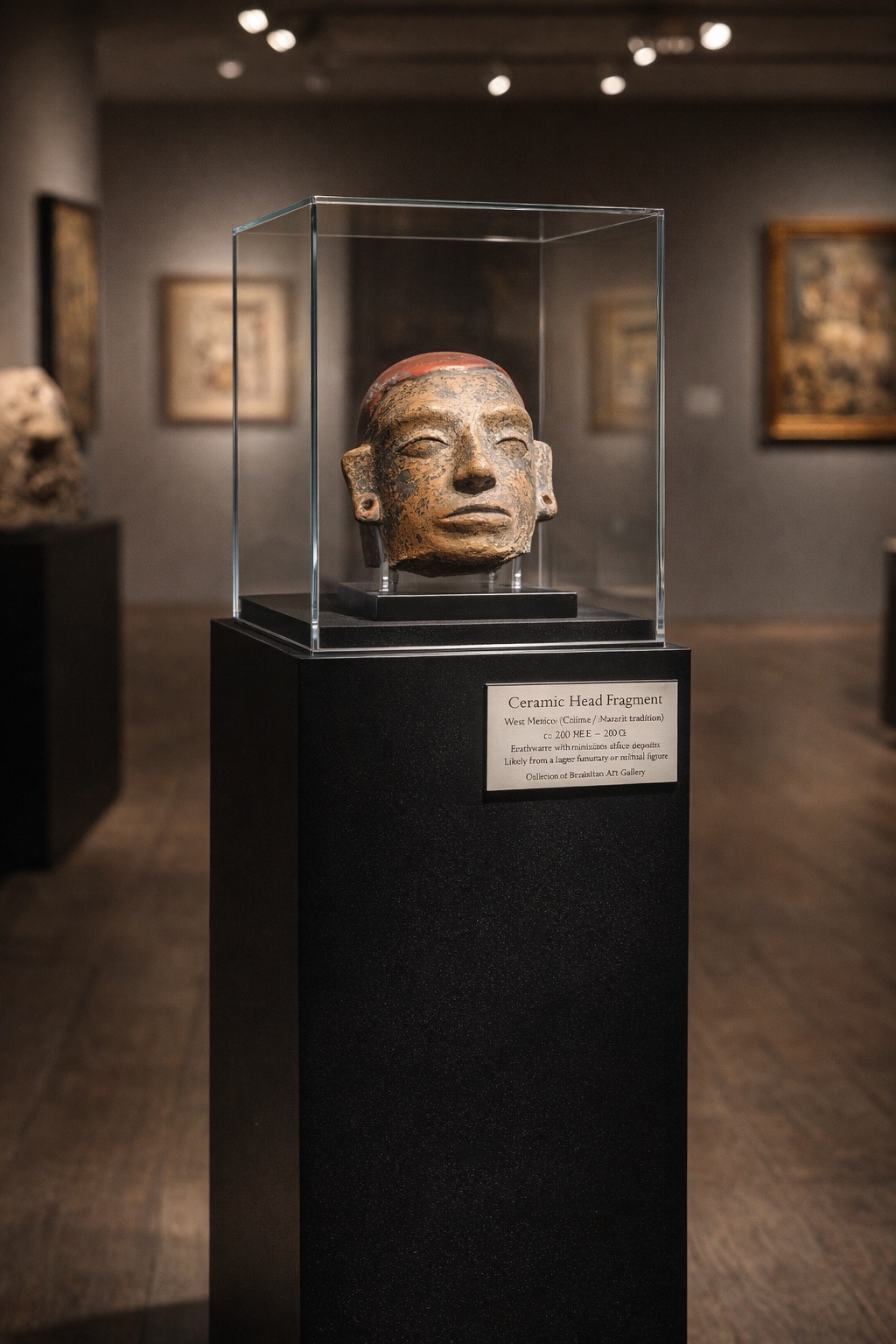
Ceramic Head FragmentWest Mexico (Colima / Jalisco / Nayarit tradition)Earthenware with mineralized surface and iron oxide pigmentc. 200 BCE – 400 CE (provisional attribution)Height: 5.5 in.
Not for sale — under active forensic and material analysis
This ceramic head fragment is consistent in form, material, and construction with the hollow effigy traditions of West Mexico, where figures of this scale and character were produced as part of funerary and ceremonial objects during the late pre-Columbian period.
The head is hand-built in earthenware, with a hollow interior formed through coil construction. Uneven wall thickness, visible internal shaping, and the presence of three interior structural nodes indicate a non-molded fabrication process—consistent with pre-industrial ceramic techniques. These internal supports strongly suggest the head was originally part of a larger hollow figure or vessel, rather than an isolated object.
The surface presents a complex and layered history. A red iron oxide pigment remains visible across the cranial region, absorbed into the clay body and worn through at points of contact. This type of pigment application is characteristic of ritual or symbolic surface treatment, rather than later decorative paint.
Across the face and upper planes, dark mineralized deposits—likely manganese-based—have penetrated the clay surface. These deposits are irregular, embedded within the pore structure, and non-fluorescent under ultraviolet examination, supporting their formation through long-term environmental exposure rather than artificial application.
Wear patterns are consistent with age and handling. The nose ridge and cheek planes exhibit soft polishing, while ear perforations—formed prior to firing—suggest the original presence of adornment or attachment. The base break is irregular and mineralized, indicating separation from a larger structure occurred long ago rather than recently.
Close forensic inspection under raking light, ultraviolet, and infrared imaging reveals:
no mold seams or industrial uniformity
no modern tool signatures or rotary marks
no evidence of modern pigment layering or surface coating
no fluorescence indicative of modern adhesives or restoration compounds
A small amount of residue at the fracture edge suggests the fragment was at some point mounted or stabilized in a later context, likely mid-20th century, a common practice among collectors and early institutional displays. This does not affect the underlying material authenticity.
Stylistically, the simplified facial geometry—almond-shaped eyes, triangular nose, and restrained mouth—aligns with known regional expressions in West Mexican ceramic traditions, particularly those associated with shaft tomb cultures. The scale and hollow construction further support this association.
While the cumulative evidence strongly favors an ancient origin, the exact dating of the ceramic remains under review. Thermoluminescence testing and additional comparative analysis are currently being considered to further refine attribution.
Inquire Privately
For pricing, additional imagery, or to arrange a viewing, please contact us.
Braselton Art Gallery is a fine art gallery serving collectors throughout Braselton, Northeast Atlanta, Gwinnett County, and the greater Atlanta area.